
Mortgage Adjustment
What is a mortgage adjustment?
Many homeowners wind up in unaffordable loans or ones that could quickly become unsustainable thanks to predatory loans like Adjustable-Rate Mortgages (ARMs) that increase interest rates over time.
Previously, you could simply refinance your mortgage to find more agreeable loan terms, but that’s no longer the case. Thanks to the COVID-19 pandemic, countless people are struggling financially, losing jobs, and falling behind on their bills. Many people don’t have the option to refinance in this struggling economy and inflated housing market, so we are seeing an increase in delinquent mortgages.


That’s where mortgage adjustments/restructuring comes in. Many lenders are opting to negotiate underlying mortgage terms to avoid expensive and time-consuming foreclosures. With more and more borrowers struggling, you have the upper hand when negotiating your loan terms.
If you currently have a predatory or unaffordable mortgage, you can restructure your mortgage to improve your loan terms, reduce your interest rate, and more importantly, stay in your own home.
What you need to know
Contrary to popular belief, you don’t have to fall behind on your mortgage payments to restructure your loan.
Your lender/service and loan number will stay the same, but your monthly financial obligation will decrease.
Restructuring your mortgage doesn’t require good credit or equity, nor does it impact your credit score.
People qualify for mortgage restructures for many different reasons, including high interest rates, reduced income due to COVID-19, negative equity, financial hardships, and Adjustable-Rate Mortgages.
Often, you can complete the entire loan restructuring process in as little as 30 days.
Next steps
Schedule your free 15-minute consultation to meet with one of the experts on our team to examine your financial situation to determine your available options. If you decide to continue after your consultation, we will gather basic documents to jumpstart the process. We will then work directly with your lender to amend your loan terms to better suit you.
We strive to provide a straightforward, transparent, and painless process. Our team works tirelessly on your behalf to provide you with the relief you need. Throughout the process, you will be able to access the status of your case at any time through the online portal.
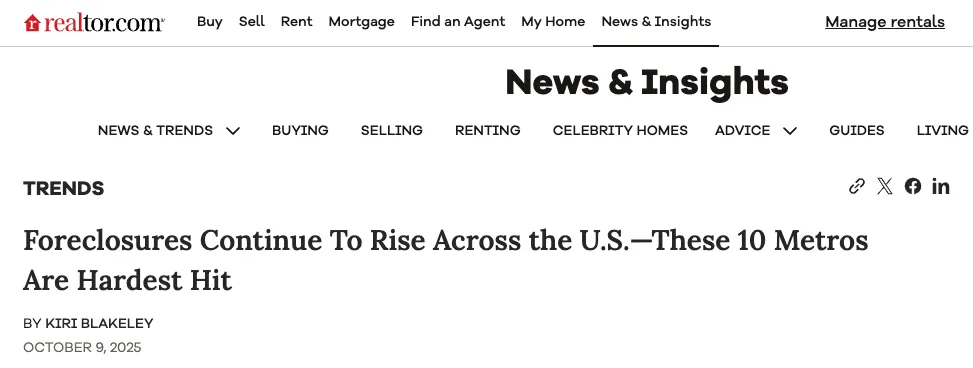
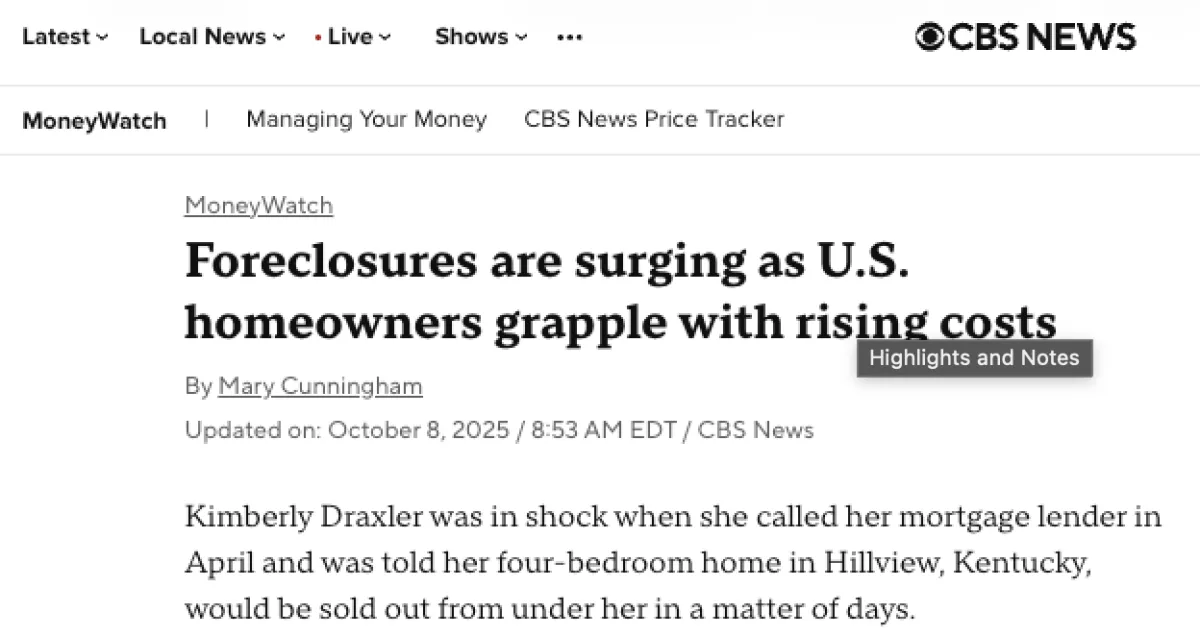
As of late 2025, home foreclosures have been rising in many parts of the United States compared to the past couple of years. Here’s a summary of the trend and reasons behind it.
Current Trend (as of Fall 2025)
• Foreclosure filings (default notices, scheduled auctions, and bank repossessions) have increased roughly 10–15% year-over-year, according to data from real estate analytics firms like ATTOM and CoreLogic.
• The rise isn’t yet at crisis levels (like 2008–2010), but it’s noticeably higher than the lows seen during the pandemic years when foreclosure moratoriums and loan forbearance programs were in place.
Key Reasons
1. Higher Interest Rates — Mortgage rates have stayed above 6–7%, putting pressure on homeowners who have adjustable-rate mortgages or who bought at peak prices.
2. End of Forbearance Programs — Some homeowners who delayed payments during the pandemic have exhausted assistance options.
3. Property Tax and Insurance Increases — Rising costs have pushed some marginal homeowners into default.
4. Stagnant or Declining Home Prices in Some Markets — Especially in parts of California, Texas, and Florida, where prices surged and then leveled off or dipped slightly.
5. Economic Pressures — Slower job growth and higher cost of living are increasing financial strain
Key Reasons
• Florida, Texas, California, Illinois, and Ohio are among the states seeing the most foreclosure activity.
• Cities like Chicago, Houston, and Orlando are showing above-average increases.

You Have 24/7 Online Access to Your Case
You Have 24/7 Online Access to Your Case